No products in the cart.

Here’s a number worth knowing: women aged 31 to 50 need about 25 grams of fiber a day, but the average adult gets around 16 grams.
That leaves a gap of roughly nine grams. And if you’ve ever eaten a lunch that looked perfectly healthy only to be hungry again an hour later, you know that what we eat matters just as much as how much we eat.
We talk endlessly about protein. Fiber tends to get a quick mention and then disappear from the conversation. But fiber supports digestion, helps meals feel more satisfying, and contributes to a healthy gut.
The good news? You don’t need a complicated meal plan, expensive supplements, or a fridge full of vegetables you’ll forget about by Thursday. A few everyday food swaps can make a meaningful difference.
Why Fiber Matters After 30
Fiber Does More Than Keep You Regular
Most of us learned about fiber as the thing that helps you stay regular. That’s important, but it isn’t the whole story.
Fiber is a type of carbohydrate that your body doesn’t fully digest. Different types of fiber serve different purposes, including supporting regular bowel movements, feeding beneficial gut bacteria, and helping you feel satisfied after meals.
Fiber-rich foods can also support healthier cholesterol levels and more gradual rises in blood sugar after eating.
Variety matters here. Oats and beans provide different types of fiber than raspberries and broccoli, so including a mix of fruits, vegetables, legumes, seeds, and whole grains is a good approach.
And if you’re trying to eat more protein, build strength, or make your meals more satisfying, fiber deserves a spot on your radar, too. It works best alongside a realistic movement routine rather than in place of one.
Why So Many of Us Fall Short
Modern meals are often built around convenience. Coffee and a bar for breakfast. A quick lunch with very little produce. Dinner that started as a plan and ended as whatever was fastest.
It also happens to women who are genuinely trying to eat well. If you’ve been focusing on protein, reducing sugar, or eating less overall, fiber can quietly fall off the plate.
Eggs, cheese, and meat provide protein but little or no fiber. A diet can look perfectly reasonable and still leave you short.
Stress and busy schedules don’t help. When you’re rushed, you tend to reach for what’s familiar and easy. That’s human. It’s also why a few reliable habits tend to work better than trying to plan perfect meals every day.
How Much Fiber Do You Actually Need?
Your recommended daily intake changes with age. The following figures are based on general dietary recommendations for adults.
| Age | Women | Men |
|---|---|---|
| 19 to 30 | 28 g | 34 g |
| 31 to 50 | 25 g | 31 g |
| 51 and older | 22 g | 28 g |
These figures come from the Dietary Guidelines for Americans 2020-2025. Individual needs can vary.
If you’re in your 30s or 40s, 25 grams a day is a useful target to keep in mind.
If that number feels abstract, try asking yourself four simple questions instead of tracking every bite:
- Does breakfast include a source of fiber?
- Does lunch include produce, beans, or a whole grain?
- Is my snack built around fruit, nuts, seeds, or vegetables?
- Does dinner include a fiber-rich carbohydrate and a vegetable?
You don’t need to get every meal perfect. You’re just looking for opportunities to include more fiber throughout the day. If all-or-nothing thinking around food is usually what derails you, that is worth working on alongside the food itself.
High-Fiber Foods: A Practical List With Grams
Knowing which foods contain fiber makes it much easier to build meals without guessing.
| Food | Serving | Approximate fiber |
|---|---|---|
| Split peas, cooked | 1 cup | 16 g |
| Lentils, cooked | 1 cup | 15.5 g |
| Black beans, cooked | 1 cup | 15 g |
| Chia seeds | 2 tbsp | 10 g |
| Green peas, cooked | 1 cup | 9 g |
| Raspberries | 1 cup | 8 g |
| Chickpeas | ⅔ cup | 7 g or more |
| Avocado | 1 medium | 7 g or more |
| Whole-wheat spaghetti, cooked | 1 cup | 6 g |
| Barley, cooked | 1 cup | 6 g |
| Pear with skin | 1 medium | 5.5 g |
| Bran flakes | ¾ cup | 5.5 g |
| Broccoli, cooked | 1 cup | 5 g |
| Quinoa, cooked | 1 cup | 5 g |
| Apple with skin | 1 medium | 4.5 g |
| Brussels sprouts, cooked | 1 cup | 4.5 g |
| Oatmeal, cooked | 1 cup | 4 g |
| Edamame | ½ cup | 4 g |
| Almonds | 1 oz | 3.5 g |
| Brown rice, cooked | 1 cup | 3.5 g |
| Sweet potato | 1 medium | 3 to 4 g |
| Banana | 1 medium | 3 g |
| Orange | 1 medium | 3 g |
| Strawberries | 1 cup | 3 g |
| Whole-wheat bread | 1 slice | 2 g |
| Carrot, raw | 1 medium | 1.5 g |
Fiber amounts are approximate and can vary by product, preparation method, and serving size. Check package labels for packaged foods.
A few things stand out.
Beans and lentils do a lot of the heavy lifting. A cup of cooked lentils or black beans can provide around 15 grams of fiber. Adding them to a meal is often a more practical strategy than trying to eat a mountain of vegetables.
Raspberries are a great fruit option. One cup provides about 8 grams of fiber. Fresh or frozen both work, so choose whichever is more convenient and affordable.
Vegetables matter, but they’re not your only option. Broccoli, carrots, and other vegetables contribute fiber, but legumes, whole grains, fruit, and seeds can help you reach your daily target without eating enormous portions.
The goal isn’t to find one magical food. It’s to build variety into meals you already enjoy.
A Real Day of Eating That Reaches 25 Grams
You don’t need a detox, a strict menu, or a new set of food rules. Here’s one example of how everyday meals can add up.
| Meal | What it includes | Approximate fiber |
|---|---|---|
| Breakfast | Overnight oats with oats, chia seeds, and raspberries | 10 g |
| Lunch | Quinoa bowl with chickpeas, broccoli, and chicken | 17 g |
| Snack | Apple with peanut butter | 4.5 g |
| Dinner | Salmon, a medium sweet potato, and a side salad | 4 g |
This example provides roughly 35 grams of fiber across the day, depending on the ingredients and portions used. You don’t need to hit that amount if your target is 25 grams.
Notice what’s doing much of the work: oats, chia seeds, raspberries, chickpeas, and quinoa. These are ordinary ingredients that are easy to keep on hand.
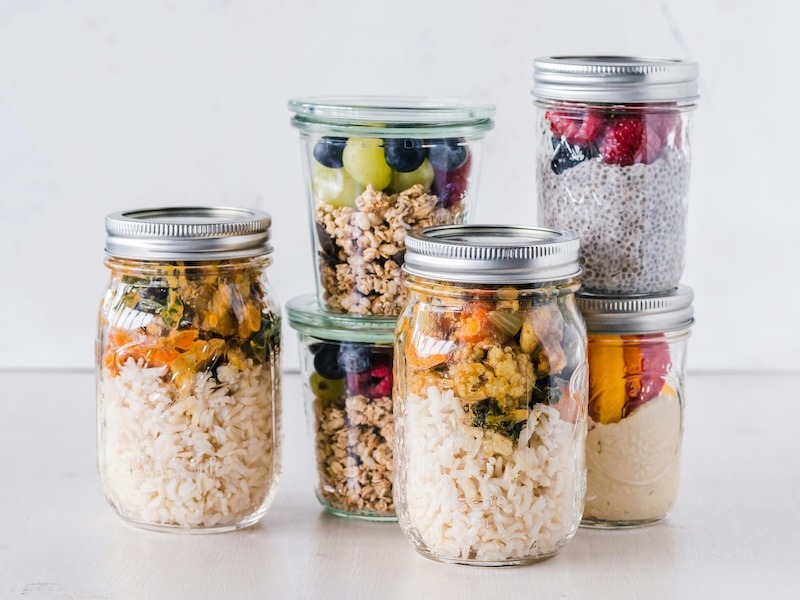
For breakfast, try old-fashioned oats with a tablespoon of chia seeds and berries. If you like prepping breakfast ahead of time, jars with lids for overnight oats can make mornings a little easier.
For lunch, quinoa makes a useful base for a grain bowl. Add chickpeas, vegetables, and a protein you enjoy.
These are options, not requirements. Use what you like and what fits your budget.
How to Increase Fiber Without Feeling Bloated
If you’ve ever gone from barely eating any fiber to suddenly adding beans, bran cereal, and a giant salad to every meal, you may already know what happens next.
Your digestive system may need time to adjust. Increasing fiber too quickly can cause gas, bloating, or cramping, especially if you’re not drinking enough fluids.
Increase It Gradually
Rather than trying to reach your entire target overnight, make one change at a time.
Here’s a simple way to approach it:
| Week | One change to try |
|---|---|
| Week 1 | Add berries and a small serving of chia seeds to breakfast. |
| Week 2 | Add beans or lentils to a couple of lunches. |
| Week 3 | Try swapping a refined grain for quinoa or whole-wheat pasta. |
| Week 4 | Make fruit, nuts, or another fiber-containing food your go-to afternoon snack. |
This is a flexible example, not a strict schedule. If your digestion needs more time, stay with a change until it feels comfortable.
Drink Enough Fluids
Fiber works alongside fluid to help keep bowel movements regular. If you increase fiber without drinking enough, constipation can become worse.
Keep water available throughout the day and increase your intake as you increase fiber, unless a healthcare professional has advised you to limit fluids.
Build Meals Around Fiber and Protein
Fiber and protein do different jobs, and meals containing both can be more satisfying.
Try oats with yogurt and berries, a quinoa bowl with chickpeas and chicken, or whole-wheat toast with eggs and fruit.
You don’t need to make every meal complicated. A few complementary ingredients can go a long way.
Don’t Force Huge Raw Salads
If large salads leave you uncomfortable, try cooked vegetables, smaller portions spread across the day, or fiber from other sources such as oats, fruit, and grains.
If bloating continues, consider how quickly you’ve increased fiber, how much fluid you’re drinking, and which foods seem to trigger symptoms. Persistent or severe symptoms deserve medical advice rather than another round of food experimentation.
Habits That Make Fiber Easier to Get
The people who consistently eat more fiber aren’t necessarily more disciplined. Often, they’ve simply made the convenient choice a little more helpful.
Keep a Few Reliable Foods on Hand
You don’t need a huge grocery list. Start with:
- One fruit you actually enjoy. Frozen berries count.
- Two vegetables that are easy to roast, steam, or add to a meal.
- A can of beans, lentils, or chickpeas.
- A whole grain such as oats, quinoa, brown rice, or whole-wheat bread.
- Chia seeds or ground flaxseed.
- One convenient snack, such as hummus, nuts, or roasted chickpeas.
If you want to try seeds in breakfast or snacks, chia seeds and ground flaxseed are two easy options. Start with a modest serving and increase gradually if you tolerate it well.
Make Small Upgrades to Meals You Already Eat
These swaps don’t require you to start cooking an entirely different menu:
- Add a tablespoon of chia seeds to oats or yogurt.
- Add black beans to taco night.
- Stir lentils into soup or pasta sauce.
- Choose whole-wheat toast instead of white bread when you enjoy it.
- Leave the skin on apples and potatoes when appropriate.
- Keep frozen vegetables available for nights when cooking is not happening.
You don’t need to do all of these. Pick the one that sounds easiest and start there.
Prep a Little, Not All Day Sunday
If a full meal-prep day stresses you out, skip it. Twenty minutes can still make the week easier.
- Wash berries so they’re ready to grab.
- Cook a batch of quinoa or another grain.
- Roast a tray of vegetables.
- Make overnight oats for two mornings.
The goal is to remove a few decisions, not to win a meal-prep competition.
When to Talk to a Healthcare Professional
Fiber can support digestive health, but more isn’t always better for everyone.
Talk with a healthcare professional if you have persistent constipation, severe or worsening bloating, ongoing abdominal pain, blood in your stool, or unexplained weight loss.
If you have IBS, inflammatory bowel disease, diverticular disease, a history of digestive surgery, or a bowel stricture, ask your healthcare professional or a registered dietitian how to adjust fiber safely. The right approach depends on your condition and symptoms.
And if certain high-fiber foods don’t agree with you, that isn’t a personal failure. You may need to adjust the type of fiber, portion size, or pace of increase.
Frequently Asked Questions
How much fiber do women need per day?
General recommendations are about 28 grams for women aged 19 to 30, 25 grams for women aged 31 to 50, and 22 grams for women aged 51 and older. Individual needs may vary.
What is the easiest way to add fiber to my day?
Start with one change you can repeat. Add berries and chia seeds to breakfast, include beans or lentils at lunch, or swap in a whole grain you enjoy.
Why does fiber make me bloated?
A sudden increase in fiber can cause gas and bloating, particularly if you’re not drinking enough fluids. Increase fiber gradually and pay attention to which foods you tolerate best.
Do fiber supplements work as well as food?
Fiber supplements can help some people meet their needs, but different products provide different types of fiber. Whole foods also provide other nutrients, so a varied diet is a good starting point. Ask a healthcare professional if you’re unsure which option is appropriate for you.
How long does it take to notice a difference?
It varies. Changes in bowel habits may happen over days, while other benefits depend on your overall diet and consistency. If symptoms persist or worsen, seek medical advice.
Can I get enough fiber from vegetables alone?
Vegetables contribute important fiber, but relying on them alone can make reaching your target difficult. Beans, lentils, whole grains, fruit, nuts, and seeds offer additional ways to get there.
The Bottom Line
If eating well feels harder than it should, fiber is one practical place to start.
For many women in their 30s and 40s, 25 grams a day is a useful target. You don’t need to overhaul your entire diet to work toward it.
Try adding berries and chia seeds to breakfast tomorrow, then include beans or lentils in a lunch later this week. Build from there.
When meals include a mix of fiber, protein, and foods you actually enjoy, eating well can feel a lot more manageable. That’s a much better starting point than trying to get everything right at once.
For more on building healthy food habits that actually stick, explore the rest of our nutrition articles.